
The senior living sector is at a pivotal moment. A new generation of residents expects more than traditional all-inclusive models, seeking instead a hospitality-driven, flexible experience. To remain competitive, operators must evolve toward integrated ecosystems that unlock new revenue through à la carte services, while also addressing the ongoing challenge of global labor shortages.
.jpg)
The industry is moving away from bundled services toward a "pay-for-what-you-use" model. This shift allows communities to diversify revenue and offer the hyper-personalization that modern residents demand.
Capturing unbilled revenue: Traditionally, services like guest meals, specialized transportation, or technical support were often "lost" in paper logs. An integrated ecosystem ensures every tray delivery or maintenance request is captured on a single, unified invoice.
The "Service in their house" mindset: Residents now expect to customize their daily lives. This means offering tiered dining plans, premium activity bookings, and on-demand concierge services that mirror a five-star resort.
In many communities, the "resident journey" is fractured by a "noise" of disconnected systems. This fragmentation creates operational friction that erodes the bottom line:
The staff efficiency gap: With a massive labor shortage, staff cannot afford to be "data entry clerks". When systems aren't synced, staff waste hours manually re-entering dining orders into billing software or checking paper logs for dietary restrictions.
The risk of "information leakage": If a resident's dietary profile in the Electronic Health Record (EHR) like PointClickCare doesn't talk to the Point of Sale (POS), the community faces significant liability and safety risks.
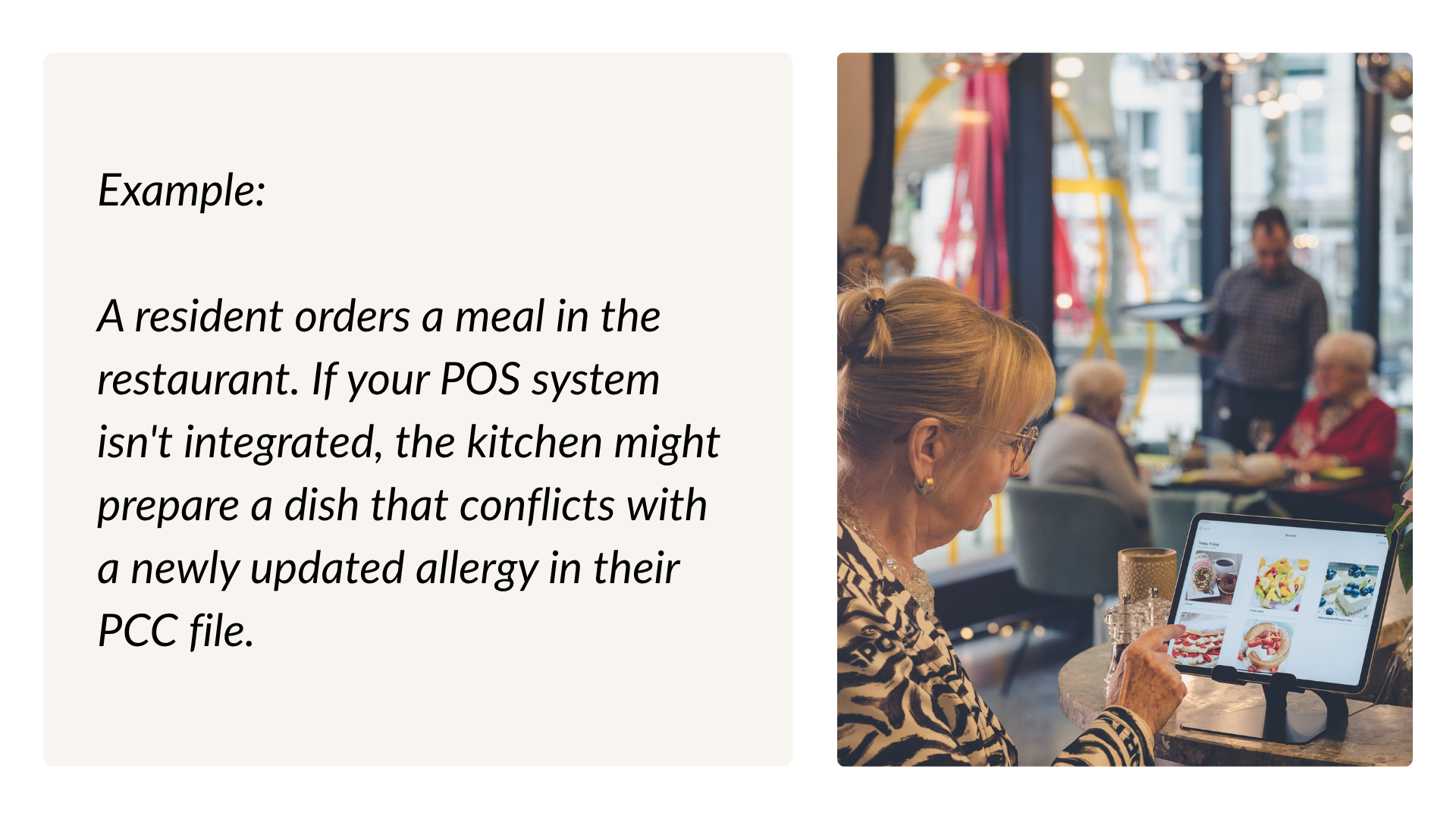
Digital Signage overload: In many communities, the attempt to "go digital" has inadvertently created a new layer of friction: information overload. When a community operates with fragmented systems, it often results in a disjointed visual environment where one screen displays dining menus, another displays the activities calendar, and yet another handles general announcements.
The "One Invoice" mandate: Residents and families deserve a coherent, real-time overview of all community charges. Without integration, billing discrepancies pop up across various services like transportation, maintenance, activities, and guest meals.
At Cubigo, we aren't just reacting to these trends; we are ahead of them. We provide the digital backbone that allows operators to function as a unified hospitality brand rather than a collection of silos.
Total "Member" involvement: We empower residents to be self-sufficient through tech-savvy tools, like web portals, iOS/Android apps, and in-suite tablets, reducing the administrative load on your front-of-house staff.
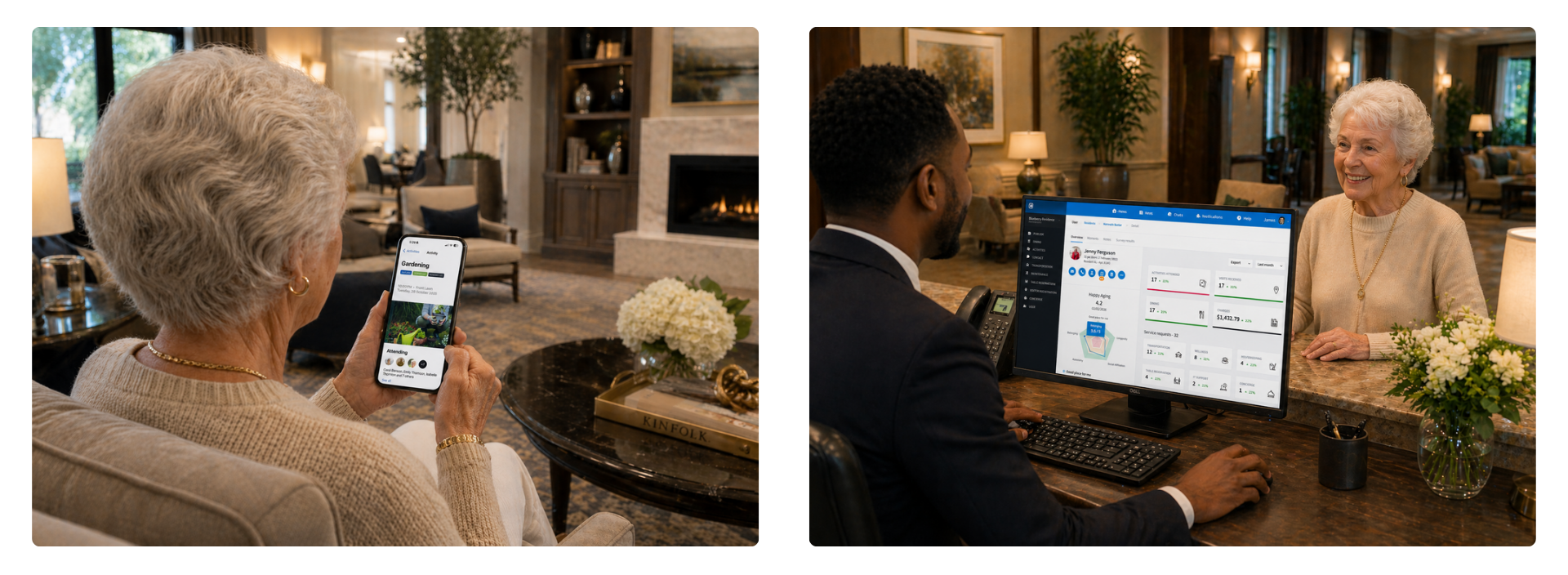
Unified POS & cross-service connectivity: Our platform doesn't just handle dining; it connects Activities, Transportation, Maintenance, and other services into one profile. Whether a resident is booking a car to the airport or a personal training session, it’s one click for them and one automated charge for you.
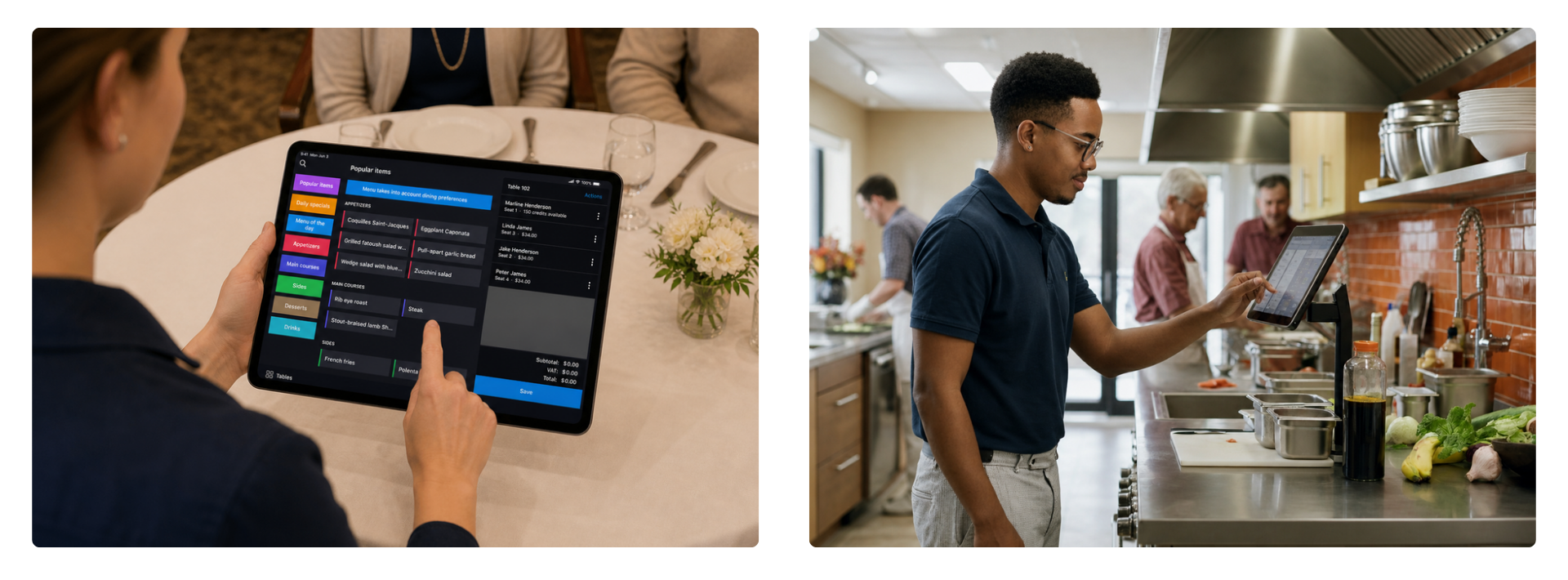
Seamless integration layer: We act as the "glue" between your existing Best-of-Breed systems. We sync in real-time with EHRs (PCC) and menu management tools like Mealsuite or Apicbase, ensuring that "Order Announcement" systems (KDS and printers) are always accurate.
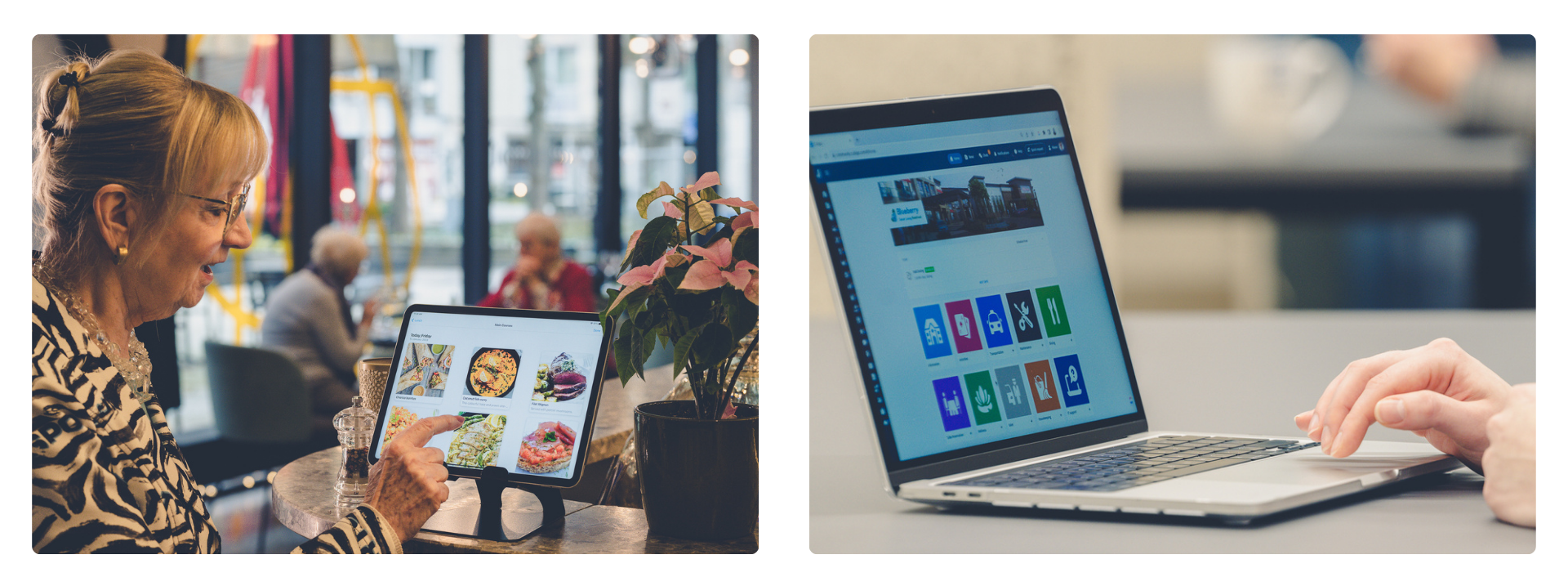
Data-driven leadership: We provide transparency across all services, allowing decision-makers to see demand patterns and optimize staffing levels based on actual resident behavior.
The future of senior living is connected, intelligent, and built around people. By adopting the Cubigo Hospitality Ecosystem, communities can transition from a fragmented service model to a high-performance hospitality culture that delights residents and empowers staff.